Verte Crecer
 Menú semanal
 Agenda SEDI 2026-2027
 Explanada No. 305, Col. Lomas de Chapultepec, Alcaldía Miguel Hidalgo, CP 11000, CDMX
 55 5520 2788
 WhatsApp Admisiones: 55 5948 5213
 contacto@sedi.edu.mx
 Lunes a viernes: 7:00 a.m. – 7:00 p.m.

Early childhood is a remarkable stage for language development. During these years, children are naturally curious about sounds, words, stories and the people around them. Being exposed to more than one language can become a meaningful part of that development, opening the door to new ways of communicating, learning and understanding the world.
Bilingual education is not simply about learning vocabulary in two languages. It is about creating opportunities for children to listen, understand, express themselves interact, and make connections across languages.
Research in early childhood education consistently highlights the importance of supporting both English and a child’s home language. A strong foundation in the home language can support English development as well as early learning, literacy, social development and other areas of development.
How do we foster bilingual learning at SEDI?
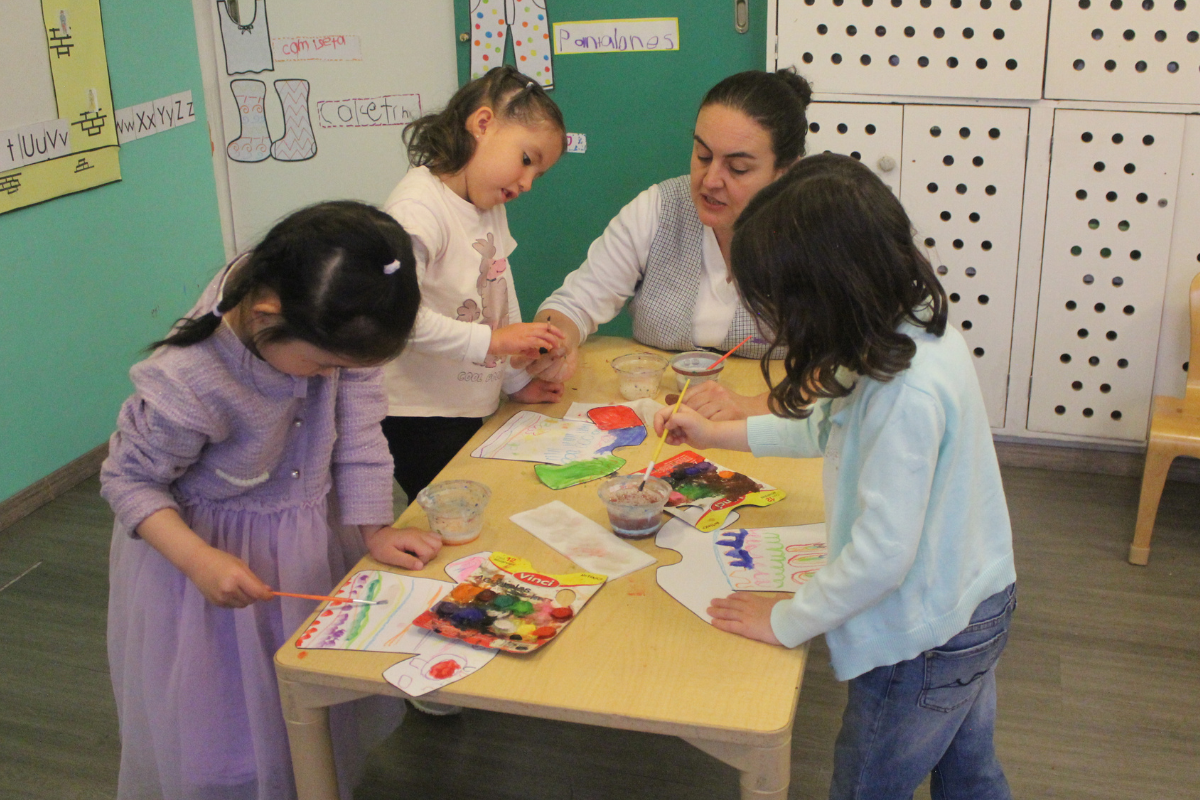
At SEDI, English is introduced as part of the children’s everyday learning experience, always respecting their age, developmental stage, and individual pace. We teach “in” English instead of just teaching English.
Through songs, stories, games, movement, routines, classroom activities and meaningful interactions, children encounter English in contexts that are familiar, playful and relevant to them. This allows language to become something they experience and use, rather than simply something they memorize.
We also understand that bilingual development does not happen in exactly the same way for every child. Some children may begin speaking English quickly, while others may first listen and understand before feeling ready to speak. Both processes are a natural part of learning a second language.
Our goal is to create a positive relationship with English: one in which children feel curious, confident and excited to communicate.
What can families do at home?
Families play an essential role in supporting bilingual development. And perhaps the most important recommendation is also the simplest: keep communicating, reading, singing and playing with your child in the language you know best.
You do not need to speak perfect English to support your child’s English learning. In fact, maintaining rich and meaningful conversations in Spanish is important because children continue building vocabulary, comprehension and communication skills through their home language.
At home, families can also:
Read together. Choose simple English storybooks and talk about the pictures, characters, and story.
Sing and play. Songs, rhymes, movement games and everyday routines are natural ways to introduce new words.
Use English in everyday moments. Simple expressions such as Good morning, Let's go, Wash your hands, or Where is your shoe? can become familiar through repetition.
Be patient. Understanding often comes before speaking. Give children time to listen and respond without correcting every mistake.
Make it enjoyable. Language grows through meaningful interactions. A child who associates English with play, affection, curiosity and connection is more likely to develop a positive attitude toward learning it.
Two languages, more ways to discover the world
Bilingual education during early childhood is not about expecting children to perform equally in two languages at all times. It is about giving them opportunities to develop linguistic resources that can grow with them.
At SEDI, we believe that learning another language is also an invitation to discover other perspectives, cultures, sounds and ways of communicating.
Because when children learn to express themselves in two languages, they are not simply learning more words—they are learning more ways to connect with the world.
*Miss Irma is the English teacher for the preschool classes at SEDI.